


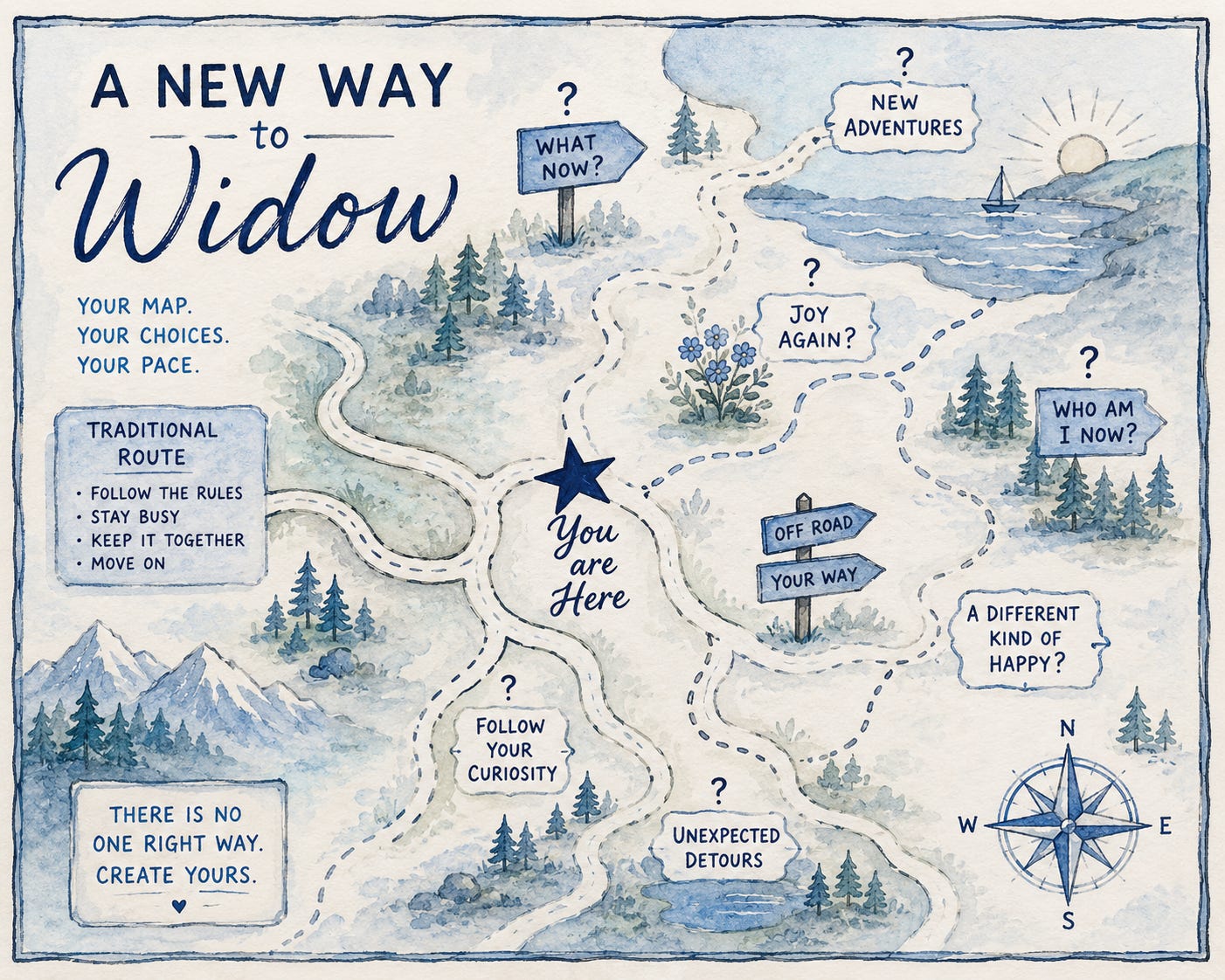
After my husband, David, died in 2023, the social worker at the hospice facility handed me a list of resources for grieving families: grief counseling, grief support groups, grief walks, grief book clubs, grief meditation sessions. It was a smorgasbord of grief.
Then my primary care doctor called to ask if I wanted a prescription for antidepressants or medication for panic attacks. I’d told him about the panic attack I had the night David was diagnosed with pancreatic cancer. I’d also seen a counselor to help me navigate the anxiety of anticipatory grief.
I thanked everyone for their kindness and concern, but quietly decided I was going to do my own thing. I didn’t know what I needed yet. So, I decided to trust my intuition and take the next right step, one small decision at a time.
Instead of grief counseling, I signed up for an improv class with Second City. Improv was something I’d always wanted to try, and it turned out to be one of the most healing things I could have done.
For three hours every week, no one saw me as “the widow.” I laughed. I played. I learned to say “yes” instead of “no.” And I remembered that joy and sorrow could exist in the same room.
Instead of taking medication, I wrote myself a prescription to chase wow moments: small adventures and unexpected experiences that reminded me what it felt like to be fully alive.
I’m not suggesting my path is better than the traditional advice. Therapy, support groups, and medication are invaluable, and sometimes lifesaving, for many people. My way of widowing was simply unconventional. It was quirky. And it was deeply personal.
It consisted of ukulele lessons and baton twirling classes. It was saying “yes” when someone asked if I’d put on a chicken costume and box a duck mascot. It meant operating a snow machine at my town’s Christmas festival, while dressed like an elf. And it included traveling to Paris alone for my 60th birthday. It became a habit of bravery, curiosity, shenanigans, and joyful absurdity.
None of these choices made complete sense at the time. Looking back, though, every seemingly random decision was leading me somewhere. Together, they formed a path that pulled me back toward life. I now call that stretch of time my Widow Gap Year.
Without realizing it, I had created A New Way to Widow.
Why I’m writing this
Most grief advice is about how to survive the loss. Almost no one talks about what comes next. That’s why I started this Substack.
You don’t have to stop looking back to begin moving forward. You just have to believe that the life ahead of you deserves your attention, too.
If you’re looking for permission to grieve in your own way, to rediscover yourself, and to imagine a future that isn’t smaller than your past, you’re in the right place. And if you love someone who’s walking this road, I hope you’ll send this to her.
Or some people start marathon running because when you don’t know what to do with your life it’s easier to put your energy into a written plan that you know leads to success. 🙄
One of the first things my therapist said after Steve passed was - there is no right or wrong way to grieve.